
BQ core bits
BQ diamond core bits, with the matrix matched to rock hardness.
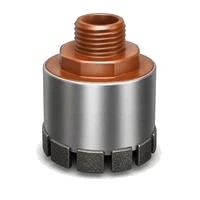
The core bit cuts the rock and shapes the core. An BQ bit drills a 60.0 mm hole and returns 36.5 mm core. Penetration rate, core quality and cost per metre depend more on the bit than on anything else.
Types of bit
- Impregnated diamond bits — fine diamonds are spread through the whole metal matrix. As the matrix wears, fresh diamonds are exposed and the bit sharpens itself. The most common type in core drilling, for medium to hard rock.
- Surface-set diamond bits — larger diamonds set on the face of the matrix. Fast in soft to medium, low-abrasion rock.
- Tungsten carbide and PCD bits — cutters of carbide or synthetic diamond compacts. Suited to soft rock, clay and sediments.
Choosing the matrix
An impregnated bit's matrix hardness is matched to the rock the opposite way round: soft, abrasive rock needs a hard matrix so it does not wear away too fast, while hard, competent rock needs a soft matrix so the diamonds are exposed in time.
| Rock | Examples | Matrix |
|---|---|---|
| Soft, abrasive | sandstone, conglomerate, weathered rock | hard |
| Medium | limestone, marble, schist | medium |
| Hard, competent | granite, basalt, quartzite | soft |
With the wrong matrix, a bit either wears out quickly or polishes: the diamonds stop being exposed and penetration stalls.
Waterways and reaming shell
Waterways on the bit face carry flushing water to the cutting edge and sweep away cuttings. In soft and broken rock, face-discharge designs keep the water from washing the core away. A reaming shell above the bit keeps the hole to gauge so the next bit does not jam.
In use
- Run a new bit in for the first few minutes at low weight and moderate speed.
- Set weight, speed and water flow for the rock, and watch the penetration rate.
- If penetration drops sharply the bit may have polished: more weight or less water can expose the diamonds again.
- Measure bit side wear and reaming-shell gauge regularly.
When you get in touch, give us the geological section or the main rock types, the planned metres and the bit brand you use now. We will help you choose the bit and the quantity.